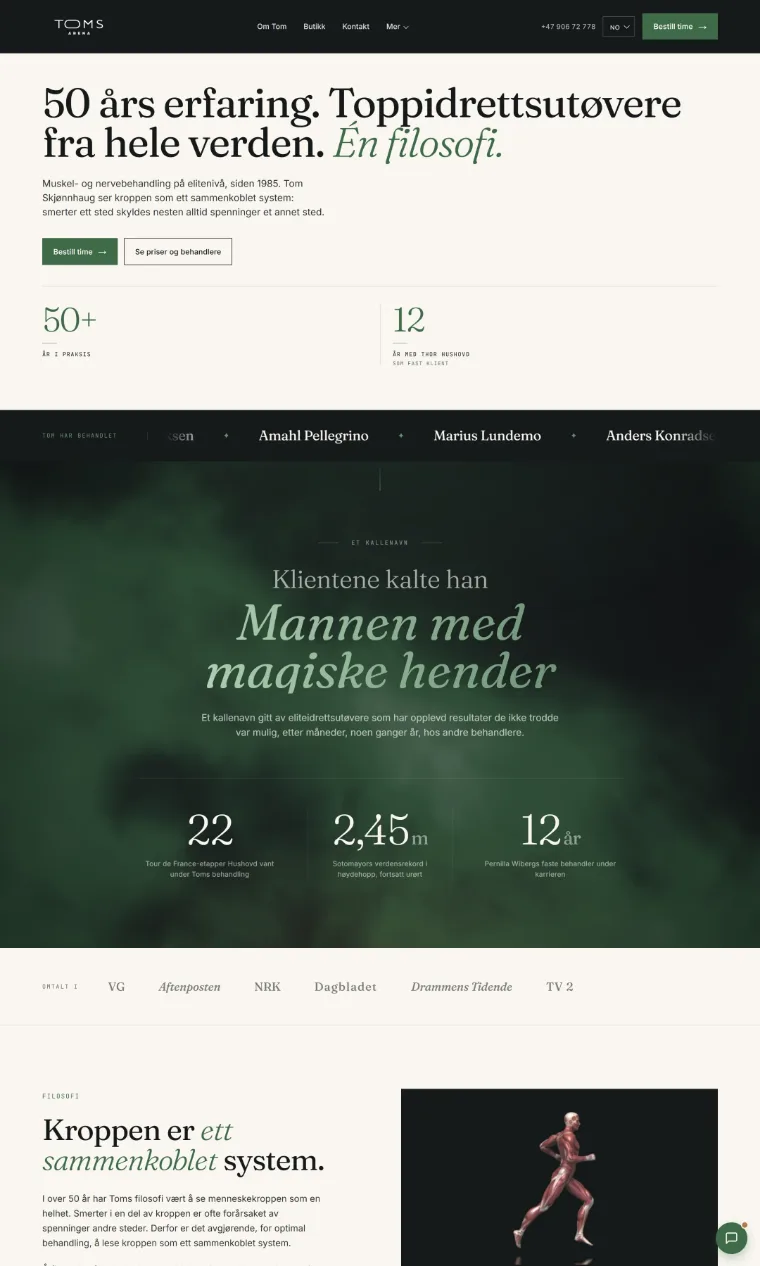
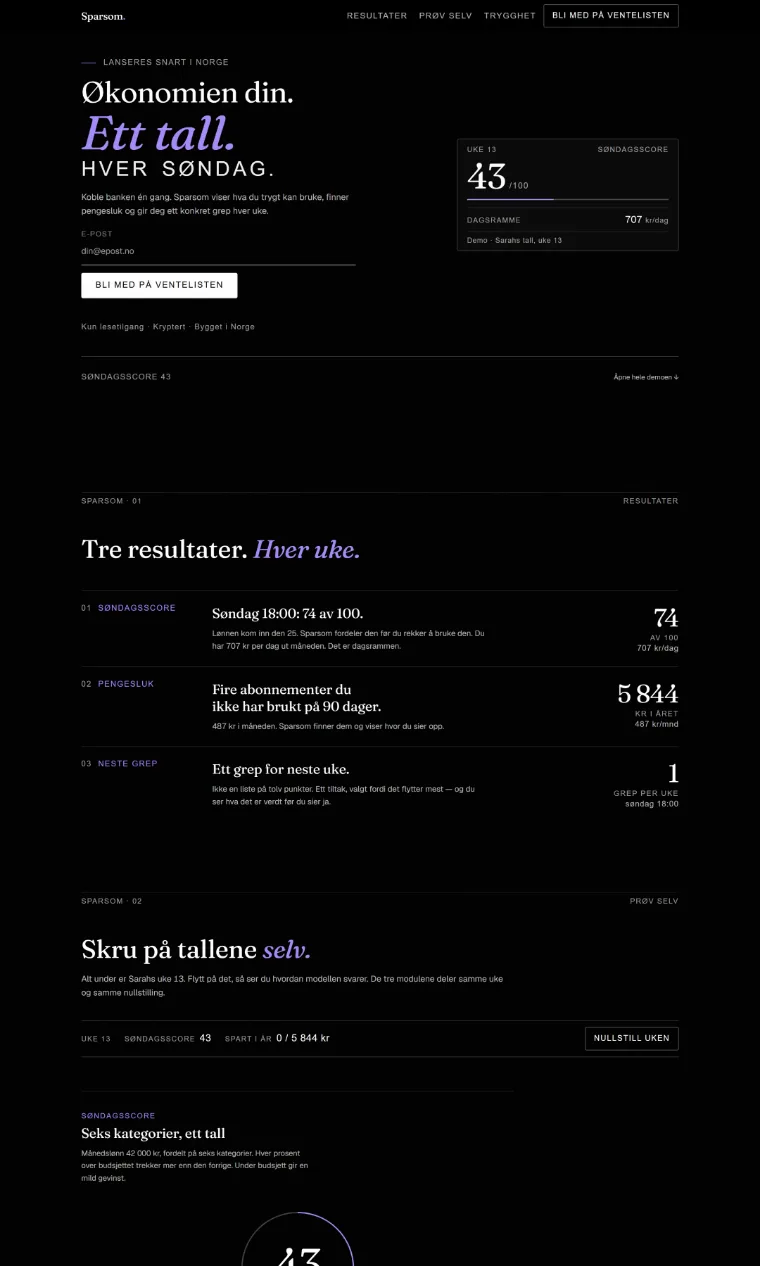
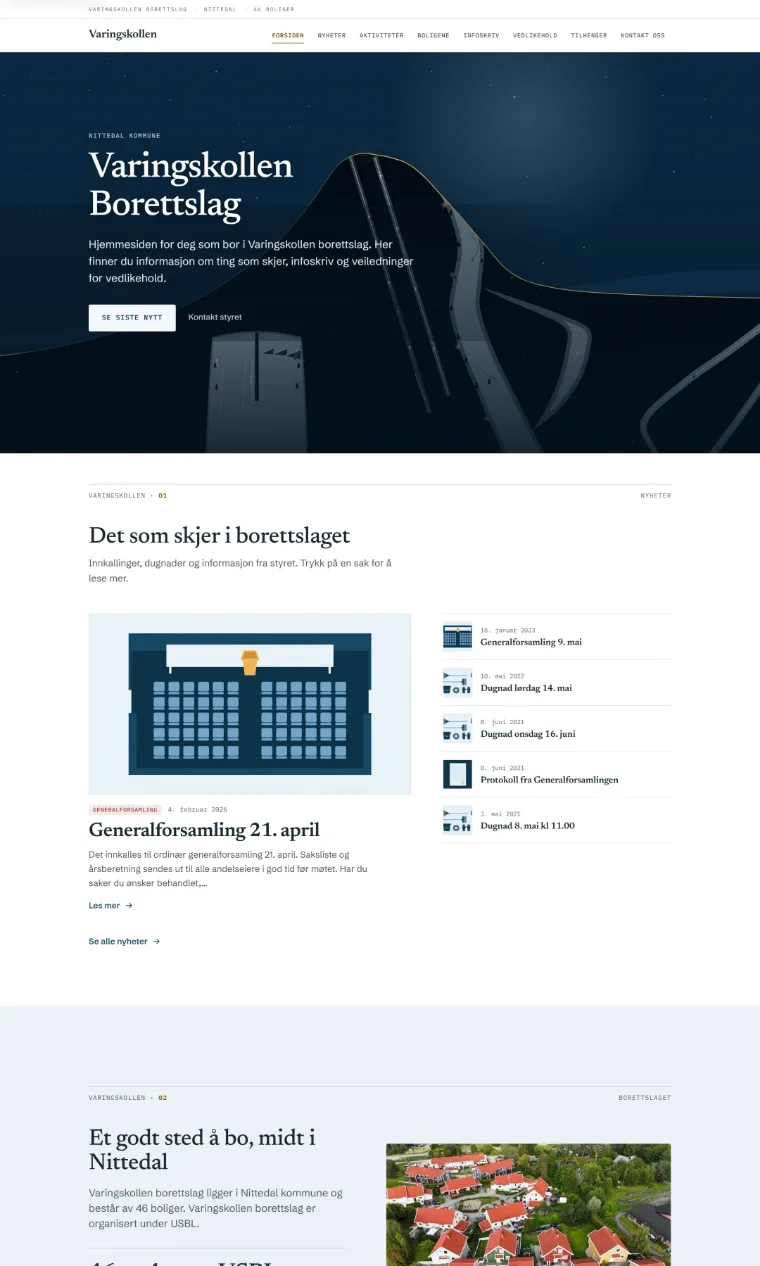
THE PROBLEMThe document links to bylaws, house rules and application forms pointed at nothing. The news items lived in the browser’s own memory, behind a password field in the frontend code. The shared trailer had no booking system.
WHAT I DIDI ported the site to Next.js and built the board’s tooling: one-time-link sign-in locked to the board’s five addresses, an admin panel for news and notices, and trailer booking against a database with row-level security, where a neighbour deletes their own booking with a key instead of having to sign in. The conditions at the top of the page are pulled from three sources: Fnugg supplies lifts, slopes and snow depth, MET supplies the forecast, and Frost supplies the station’s measurements. Fnugg’s terms require the credit to sit with the data, so it renders only on the page that shows the conditions, and disappears if a source is down.
STATUS TODAYThe database layer is built, but waiting for the board to switch it on.
STACKNEXT.JS · TYPESCRIPT · TAILWIND · VERCEL